
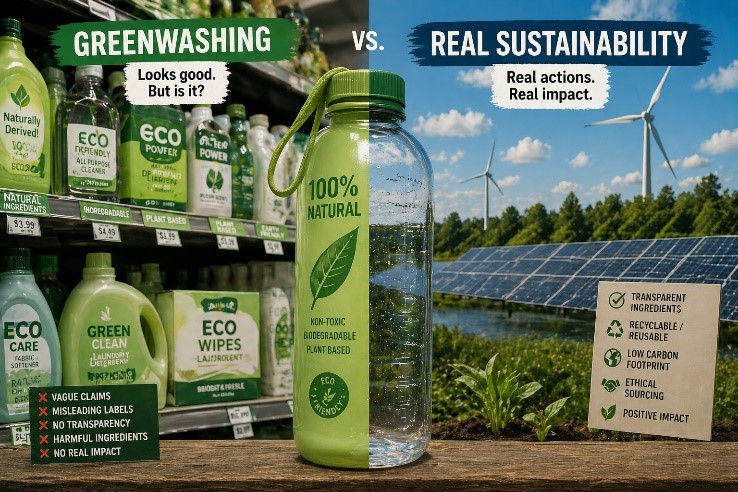
As consumers become more environmentally conscious, businesses are eager to showcase their green credentials. However, not all environmental claims are equal. The rising demand for sustainable products has led some corporations to take shortcuts. Understanding the critical difference between greenwashing and real sustainability is essential for making informed purchasing decisions and protecting our natural world.
Greenwashing occurs when a company spends more time and money on marketing itself as environmentally friendly than on actually minimizing its environmental footprint. Common deceptive tactics include using vague language like eco-friendly or natural without providing any scientific proof. Companies might also use green packaging or earthy imagery to distract consumers from the fact that the product itself is highly harmful. Another frequent tactic is highlighting one minor positive change while ignoring massive overall pollution created during manufacturing. The primary goal of greenwashing is to deceive consumers into feeling good about their purchases, ultimately driving up profits without requiring the business to change its destructive core practices.
Real sustainability involves a fundamental shift in how a company operates. It requires measurable goals, transparent reporting, and a genuine commitment to continuous improvement across the entire supply chain. A truly sustainable business addresses environmental, social, and economic factors simultaneously. This might involve powering facilities with renewable energy, sourcing raw materials ethically, minimizing manufacturing waste, and ensuring fair wages for all workers. Instead of hiding negative impacts, these companies openly share both their successes and their ongoing challenges. They frequently possess independent third-party certifications that hold them accountable to strict, verifiable environmental standards.
To tell these two concepts apart, consumers must look beyond surface level marketing. Real sustainability is backed by concrete data and public accountability, while greenwashing relies on superficial aesthetics and empty promises. By learning to spot deceptive marketing and actively supporting authentic sustainable practices, consumers can use their purchasing power to reward companies that are truly protecting the planet for future generations.
Thank you for reading!!
Also read:
Beyond the Buzzword: The True Meaning of Everyday Sustainability